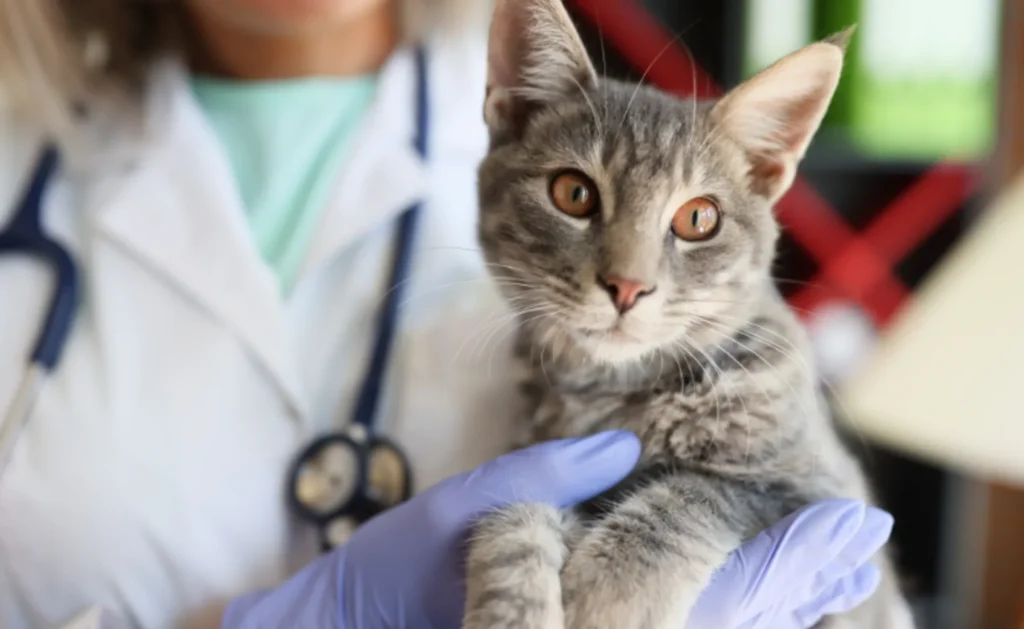
Most cat emergencies happen without warning — and in New York City, knowing what to do in the first ten minutes can determine the outcome. This is the complete guide to recognising a genuine feline emergency, what to do before you reach a vet, and how to find urgent and after-hours care across all five boroughs.
The Most Important Thing to Do Right Now
Before reading any further — identify your nearest 24-hour emergency veterinary hospital and save the number in your phone. Do it now, before you need it. In an emergency, searching for a vet while watching your cat deteriorate costs minutes that matter.
The Animal Medical Center on East 62nd Street is New York City's primary 24-hour emergency and specialty hospital, open every day of the year. Every NYC cat owner should know the address: 510 East 62nd Street, Manhattan. Beyond AMC, BluePearl, VERG, and several independent emergency practices operate across the boroughs with after-hours capacity.
Animal Medical Center (24hr): (212) 838-8100 · BluePearl Brooklyn: (718) 522-9400 · VERG Brooklyn: (347) 457-8374 · ASPCA Animal Poison Control: (888) 426-4435
Symptoms That Require Emergency Care — Right Now
These symptoms are life-threatening. Do not wait for your regular vet to open. Go directly to an emergency hospital.
- Inability to urinate — especially in male cats; straining with no output is a blocked urethra and is fatal within 24–48 hours without treatment
- Open-mouth breathing or panting — cats do not pant normally; this signals respiratory distress, heart failure, or extreme pain
- Collapse or inability to stand — sudden collapse, dragging of back legs, or loss of coordination requires immediate evaluation
- Pale, white, blue, or grey gums — check by lifting the lip; pink is normal; any other colour indicates cardiovascular or respiratory failure
- Seizures — any seizure activity, especially a first seizure or one lasting more than two minutes
- Known or suspected toxin ingestion — lilies are severely toxic to cats and cause acute kidney failure; call ASPCA Poison Control immediately
- Severe trauma — falls from height (high-rise syndrome), being hit by a vehicle, or any significant impact
- Uncontrolled bleeding — wounds that do not stop bleeding within five minutes
- Extreme distress or unrelenting crying — vocalisation that is abnormal for your cat, especially combined with hiding or aggression
Symptoms That Require Same-Day Urgent Care
These symptoms are serious but not immediately life-threatening in most cases. They require veterinary evaluation the same day — not emergency care unless they worsen rapidly.
- Vomiting more than twice in 24 hours — or any vomiting with blood
- No food or water for more than 24 hours
- Litter box changes — straining with some output, blood in urine, urinating outside the box when this is new behaviour
- Eye changes — sudden cloudiness, squinting, discharge, or a third eyelid visible
- Limping or sudden lameness — especially if the cat is not bearing weight on a limb
- Sudden weight loss — visible in the spine or hips when this wasn't present before
- Laboured or rapid breathing at rest — not open-mouthed, but noticeably faster or harder than normal
- Swollen abdomen — distension that appears suddenly
What to Do While Getting to the Vet
The window between recognising an emergency and arriving at the hospital is not wasted time. What you do in that window affects the vet's ability to treat your cat effectively.
- Stay calm — cats read owner distress and it elevates their own stress response, worsening conditions like respiratory distress and pain
- Confine your cat in a carrier — even a cardboard box is better than holding a frightened, injured cat loose in a car or taxi
- Do not give any medication — human pain medication including ibuprofen, acetaminophen, and aspirin are all toxic to cats; do not administer anything without vet instruction
- Do not offer food or water — if surgery is required, a full stomach is a complication
- Call ahead — call the emergency hospital while you're on your way; they can prepare for your arrival and advise you on immediate first aid
- Bring your cat's records if accessible — medication list, any known allergies, and your regular vet's contact information
The Lily Problem — NYC Cat Owners Need to Know This
True lilies — Easter lily, Tiger lily, Stargazer lily, Asiatic lily — are severely and rapidly fatal to cats. Every part of the plant is toxic, including pollen and the water in the vase. A cat who walks through lily pollen and grooms it off their paws can develop acute kidney failure within 24–72 hours.
In New York City, lilies are sold at every deli, bodega, and flower stand — making them one of the most common sources of feline toxin exposure in the country. The rule for NYC cat owners is absolute: no lilies in the home, ever. Not cut, not potted, not in a bouquet someone else brought.
If you suspect lily ingestion, call ASPCA Animal Poison Control at (888) 426-4435 and go to an emergency hospital immediately. Time is the critical factor — treatment within six hours of ingestion can prevent kidney failure; treatment after 18 hours frequently cannot.
Lilies (all true lilies — fatal) · Tulips · Daffodils · Azalea · Sago palm · Pothos · Philodendron · Aloe vera · Snake plant · Eucalyptus. When in doubt, check the ASPCA toxic plant database before bringing any plant home.
High-Rise Syndrome — A Specifically NYC Risk
High-rise syndrome — cats falling from windows or balconies — is a New York City–specific emergency that emergency vets here see regularly, particularly in spring and summer when windows are open. Counterintuitively, cats falling from intermediate heights (two to six stories) are often more severely injured than those falling from greater heights, because they don't have time to reach their terminal velocity and right themselves fully.
A cat that has fallen from any height above the first floor requires emergency evaluation even if they appear uninjured and are walking normally. Internal injuries, pneumothorax, and fractured palates are common and not immediately visible.
Prevention is straightforward: window screens on every openable window. Check screens before spring. Replace any screen that is loose, torn, or pops out under moderate pressure.
When Your Regular Vet Is Closed
Knowing your after-hours options before you need them is one of the most practical things an NYC cat owner can do. The city's emergency veterinary infrastructure is genuinely strong — but it requires knowing where to go.
Beyond the Animal Medical Center, NYC's emergency vet landscape includes Bond Vet locations with extended urgent care hours, BluePearl specialty and emergency practices in Brooklyn and Manhattan, VERG in Brooklyn, and several independent practices with after-hours answering services that can advise on urgency and direct you to the right facility.
Our directory includes every emergency and urgent care veterinary practice across all five boroughs — searchable by neighbourhood so you can identify your nearest option in under a minute.
Find Emergency and Urgent Care Vets Near You
Locate your nearest option before you need it: Veterinarians — NYC Directory across all five boroughs, including emergency and after-hours practices.
Every emergency and urgent care veterinary practice across Manhattan, Brooklyn, Queens, the Bronx, and Staten Island — with phone numbers, hours, and neighbourhood search.
Find Emergency Vets →